Emails vs Letters - Differences and Similarities
Nov 30 2022
Part 3 of 5
Next in 10s
Highlighting the Subject
Unlike a letter which doesn’t start with a headline, the recipient of your email will be able to (hopefully) guess the main reason, or at least your incentive for writing from the subject line. This is why most email writing guides suggest you keep your email subject line short and to the point. The subject line should serve to inform the reader about what they could expect from the rest of the email and be rather precise. Start an email with “Quick Question” and “Just a Moment of Your Time”, for example, and it’ll be more than certain that your email won’t be put on the High Priority list. For a more repelling result, try the all caps approach. The role of the subject line when writing letters is usually filled by the first line. “I’m writing in regard to…” is still a rather popular choice to introduce the main reason for you writing. This can be used in emails as well, although a well constructed subject line can eliminate the need for such an explanation.Know Your Audience
The style in which you write your emails is very much tied with who you’re writing to. Although emails are considered less formal than letters, the fact is that most of the 205 billion emails that are sent every day are for business. Nobody will judge your stylistic choices when sending cat pictures to your aunt but more formal emails are still subjected to a certain standard. This standard also depends on the business sector where you’re writing. With the emergence of new, hip internet companies (think Apple and Facebook), work culture has started becoming more casual, and there is more of a focus on merging work with the life outside. This approach also carried over to the level of formality that is expected from business emails. With the trend of “hacking” everything from language learning to life itself, there is less time to focus on writing pristine business letters. In more traditional sectors, like banking and education, for example, changes have been a lot less drastic. In these fields, emails and letter still start with “Dear Dr.,” and end in “Sincerely Yours,” – anything less is deemed unfitting. In these cases, the more traditional approaches are definitely the best to start with, especially if you’re writing to someone in a higher position. If you then end up in a longer correspondence with the same person, it is possible for the subsequent emails to become less formal in tone – but be careful to let your recipient dictate the level of formality.Conclusion – Although Less Formal, Some Business Writing Rules Apply
In general, emails are considered to require less a formal style of writing than letters. This can be attributed to the sheer number of emails most of us write daily – a casual tone feels more natural and is quicker to write in than highly formalised letters. However, official correspondence should still follow the rules of traditional business writing. So, when considering how to write your next email, first take into account who you’re addressing it to, and then pick the corresponding style. But if you’re going for the personal, heartfelt touch – there is no substitute for the handwritten letter. For more tips on writing both letters and emails, check out this page.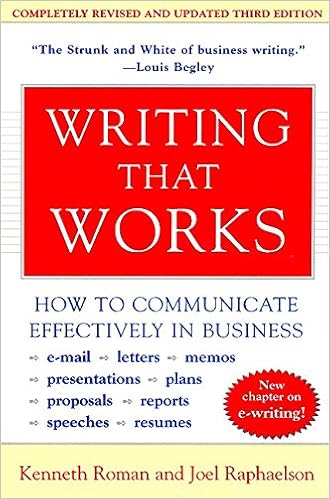
Book:
Writing That Works
How to communicate effectively in business Buy on Amazon UK Buy on Amazon US
Apr 27 2026
How Hard Is Vietnamese to Learn? A Complete Guide for English Speakers
Mar 27 2025
Why I Teach: Tanner Schmidt, 2nd Grade Teacher
Mar 27 2025
Rising Vaping Issues Among School Pupils
Mar 27 2025
Trump Seeks Supreme Court Approval for Teacher-Training Funding Cuts
Mar 27 2025
Challenges Faced by Educators During and After the COVID Pandemic
Mar 27 2025